
Our People
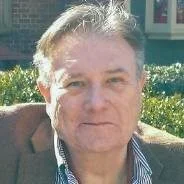
Lowell Frederick Christy, Jr. | 1948-2025
We honor the memory of Lowell Christy, Ph.D., co-founder and driving force behind The Forum on Democracy—a rigorous and original thinker devoted to understanding culture at the meta level of social change. Trained as a cultural anthropologist and scholar of consciousness, Lowell spent a lifetime mapping how ideas, intelligence, and institutions shape societies over time. Utterly committed to advancing the Forum’s goals, he believed that progress begins by identifying the divides where communication breaks down—and by patiently building new structures to bridge them. His intellectual clarity, depth, and devotion to thoughtful transformation continue to guide the Forum’s work.
Morris Bosin, Board President
Dr. Morris Bosin is a seasoned executive with 50 years of experience in successfully leading strategic and performance planning initiatives at several Federal agencies; and an additional 16 years as an experienced management consultant with the Federal sector. He is also a published expert in planning and decision-making. He has accomplished major performance management program for the U.S. Customs and Border Protection, the Department of the Interior, the U.S. Food and Drug Administration
Daniel Wolk, Board Secretary
(Bio coming)
Valarie Lamont, Board Vice President
Valarie Lamont received her Ph.D. in Political Science from the University of Illinois, Champaign-Urbana. While there, she was a member of the Biological Computer Laboratory, and a Research Associate with the PLATO Laboratory, the first computer-assisted instruction system. While at the PLATO Lab, Dr. Lamont created the first application program to demonstrate how computers in the future could be used not only in education but also to involve Citizens in local decision making.
Terry Anderson
Terry Anderson is a former journalist, writer, and teacher of journalism and diversity. He is a former U.S. Marine and Vietnam Veteran, and author of the book “Den of Lions,” about his seven years as a hostage of Shiite radicals in Lebanon. He is honorary chair of the Committee to Protect Journalists, and founder of the Vietnam Children's Fund, which has built more than 50 schools in Vietnam.
Robert Knisely
Robert Knisely (Harvard, Georgetown Law) completed 30 years of Federal government service (including 20 years as a senior executive) in 2000. He served in the departments of Defense, Health Education and Welfare, Housing and Urban Development, Commerce, Energy, Transportation, and Education. Highlights included heading the US Delegation to the UN-sponsored First World Conference on Informatics in Government and serving as one of the three civil servants chosen to direct Al Gore’s National Performance Review.
Richard Knowles
Richard Knowles is President of Richard N. Knowles and Associates, Inc. He helps organizations move towards and sustain safety excellence using systems thinking to solve complex problems working with teams at all organizational levels to share information, build trust and interdependence, and release the energy and creativity of the people. In using this approach as a plant manager, he led his 1,300-person chemical manufacturing plant to excellence reducing the Total Recordable Injury Rate by 98%, lowering emissions by 95%, increasing productivity by 45% and raising earnings by 300%.
Marc Pierson
Dr. Marc Pierson is an expert in accountable communities for health and health technologies. For 18 years Dr. Pierson held executive positions at PeaceHealth, a regional healthcare systemin northwest Washington State. His work has always been focused on organizational learning and toward the whole community served by health-care organizations. He led in creating a countywide integrated delivery system, and in developing communitywide, patient-centered technologies.
Stuart A. Umpleby
Stuart A. Umpleby is professor emeritus in the Department of Management at the George Washington University in Washington, DC. He received degrees in engineering, political science, and communications from the University of Illinois in Urbana-Champaign. Umpleby has published articles in Science, Policy Sciences, Population and Environment, Science Communication, Futures, World Futures and many other U.S. and foreign language journals. He received the Norbert Wiener Award of the American Society for Cybernetics.
